

 0 Comments
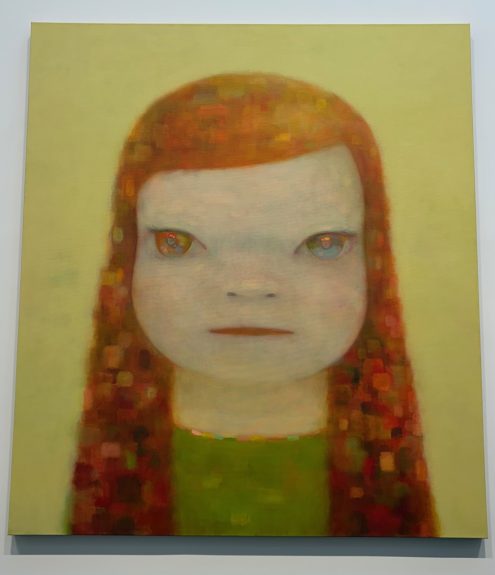
That one exhibit everyone and their mom have been going to
You’ve probably seen these paintings of doll-like figures in everyone’s Instagram stories for the past 2 weeks. Yoshitomo Nara’s paintings find a way to resonate with viewers, especially Gen-Z. His cartoon-like depictions of children with big heads and spaced apart eyes create a cute appearance, which contrasts some of the more serious elements of his paintings.
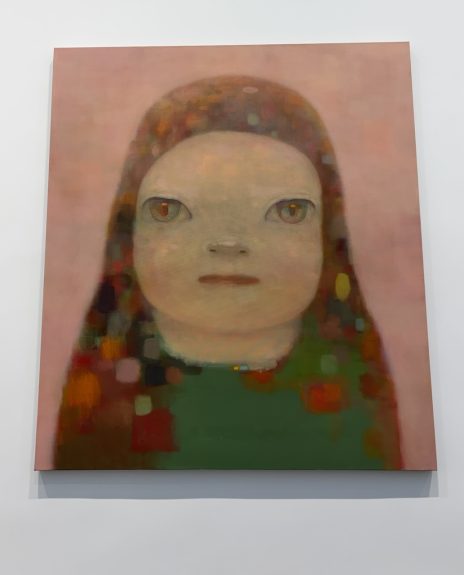
Starting with the most popular piece, Matryoshka, Nara uses blurs of bright, rainbow, colors radiating from the child subject, creating a sense of energy around her. This contrasts the child’s serene expression, perhaps showing that like a matryoshka, a Russian nesting doll, children have layers. Having less life experience does not necessarily make the emotions and thoughts of children elementary.
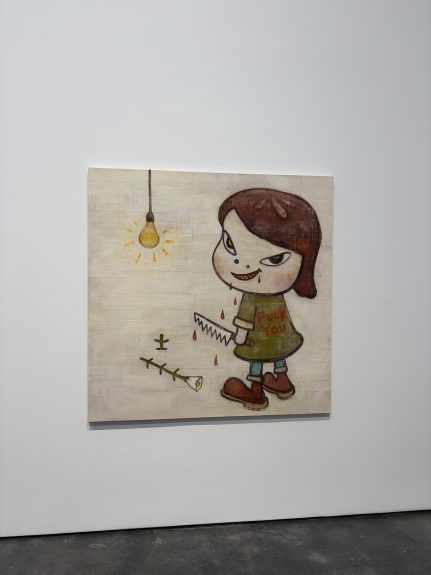
Another popular, yet more disturbing, piece from Nara’s collection, Dead Flower, argues against commonly associated traits of children. A young girl is shown with a knife in front of a cut flower, implying she has killed it. The innocence we attribute to children, and our understanding of children as creations, opposes the destructive nature of this violent event.
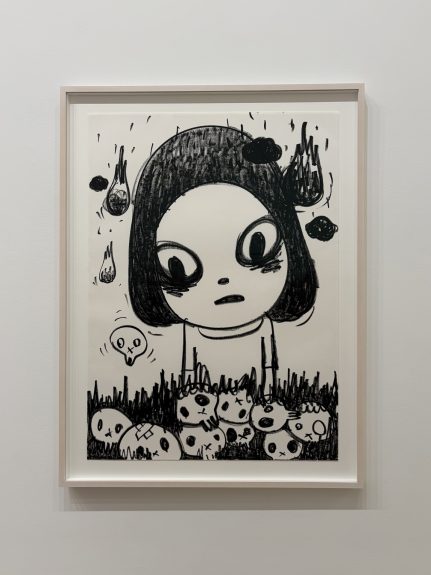
In addition to using paintings to show his ideas about childhood, Nara also uses paintings to depict anti-war beliefs. This can be seen in paintings like Skulls, which shows a girl surrounded by skulls while bombs fall above her. Here, Nara is recalling the nuclear bombing of Hiroshima, criticizing the nature of our world in which children are exposed to such events.
Whether a long-standing fan of Nara’s works, or just hopping on the bandwagon, everyone is bound to be left with new thoughts and ideas to grapple with upon viewing the exhibition. The exhibition is located about 40 minutes away from campus at the David Zwirner gallery in Chelsea, so it is a bit of a trek, but truly worth it if you can find the time. It is only on display until December 12, so be sure to visit before then!
 Loading ...