

 1 Comments
Days before his arrest, Jeffrey Epstein sent himself a list of figures spanning politics, celebrity, finance, and, seemingly out-of-place, academia. How did these academics—including Columbia’s own Richard Axel and Brian Greene—become integrated into Epstein’s network, and what motivated his interest in these elite academic circles? Through an examination of Epstein’s personal correspondences and related news reporting, patterns begin to emerge in how these individuals operated as a part of Epstein’s broader network.
On June 30, 2019, notorious sex trafficker Jeffrey Epstein sent one of his final emails. Six days later, he would be arrested; less than two months after that, he would be found dead by suicide in a Manhattan jail cell. The context of the email remains unclear. It was a list of largely unintelligible names sent only to himself, bearing the subject line “list for bannon steve.” Steve Bannon, a media executive who briefly served as chief strategist in the White House under Donald Trump, was reported to have maintained contact with Jeffrey Epstein in the years after Epstein’s initial conviction, even as scrutiny of his conduct intensified. Inside the list of names were reported references to many of the expected high-profile figures: Bill Clinton, Prince Andrew, Woody Allen, Jes Staley, and a variety of other politicians, billionaires, and celebrities. However, interspersed between these global elites unexpectedly found references to prominent academic figures, including a partial reference to Columbia’s own Richard Axel and a direct reference to Brian Greene. Axel, Nobel laureate and former co-director of Columbia’s Zuckerman Mind Brain Behavior institute, has publicly apologized for his relationship with Epstein and has drawn back his responsibilities to focus on research and teaching in his lab. Greene provided a short statement to Columbia Spectator in which he wrote that “In my efforts to support the success of the World Science Festival, I had contact with Jeffrey Epstein on a few occasions over a period of years,” and “I deeply regret any contact that we had.” But how and why did figures like Axel and Greene become integrated within Epstein’s network of elite connections?
To understand how academics became a part of Epstein’s circle, it is first necessary to examine his motivations in forming these connections. Throughout his life, Epstein demonstrated a sustained interest in cultivating relationships with high-status academics. This has been heavily reported on through his aggressive philanthropy and institutional involvement with universities such as Harvard and MIT. There is no single, definitive explanation for this. Some have speculated that Epstein possessed a genuine interest in scientific inquiry—and desired the positive public perception that came along with it. Others argue that his engagement with academics functioned as a way to clean up his reputation in elite society after his 2008 conviction for soliciting prostitution from a minor. In any case, his proximity to intellectuals appears to have functioned as a form of self-legitimization, enabling him to buy and charm his way into elite intellectual circles where he otherwise would not have belonged. Through this lens, Epstein’s engagement with academia functioned as a strategy by affiliation: by embedding himself among respected scholars, he effectively borrowed their credibility.
One of the most important connections Epstein cultivated was with literary agent John Brockman and his organization the Edge Foundation. Through its online publication, Edge sought to bring together leading thinkers, innovators, and artists. These people would, as its website states, “arrive at the edge of the world’s knowledge, seek out the most complex and sophisticated minds, put them in a room together, and have them ask each other the questions they are asking themselves.” To be affiliated with Edge was not just a testament to a contributor’s intellect or originality, but a status symbol—measured by who was granted access to this “room.” Epstein was one of the primary funders of Edge with his donations amassing almost 75% of the almost $857,000 in contributions between the years 2001 and 2017. Through Edge and Brockman, Epstein had access to some of the most prominent figures of the time, with invitations to Edge’s infamous “billionaires’ dinners,” sharing space with individuals like Jeff Bezos, Elon Musk, and Bill Gates in 2011. In 2006, Brian Greene attended one such dinner. As an associate of Brockman, who had previously sold the rights to Greene’s The Elegant Universe for $2,000,000 in 1999, Greene’s presence demonstrates how Epstein’s relationship with Brockman and the Edge Foundation extended beyond philanthropic association into significant access to high-profile academics.
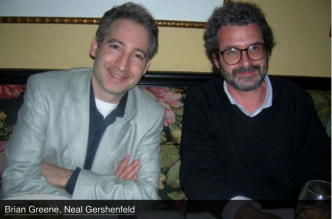
In 2006, Epstein wrote that Rupert Murdoch, a media executive and owner of major news organizations including Fox News and The Wall Street Journal, had expressed interest in “science fair,” but had been told to go through Mort Zuckerman. The “science fair” referenced in the email may have been connected to the World Science Festival, which Greene would later co-found in 2008 with Tracy Day, a former journalist and television producer. Epstein instructed an assistant to “have Brian Greene call Mort Zuckerman regarding [the] science fair.” Zuckerman, another major media owner and Columbia University donor, would go on to pledge $200 million for the Zuckerman Mind Brain Behavior Institute in 2012. This exchange suggests that Epstein was able to facilitate communication between figures in various spheres of influence across media, philanthropy, and academia. Through this, Epstein not only gained access to these elite networks, but additionally positioned himself as an intermediary between them.
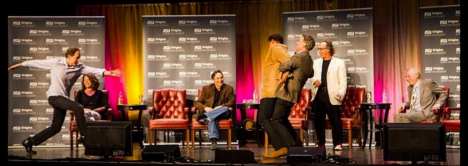
In January 2010, Epstein and Greene attempted to coordinate a meeting in Florida, with Greene suggesting April 8 following a lecture at Florida State University. Epstein also extended dinner invitations to Greene on multiple occasions, though several of these meetings were ultimately cancelled. In 2011, an attempted meeting between Greene and Alexa Staley, daughter of JPMorgan executive Jes Staley and a later Columbia Physics PhD student, was cancelled at the last minute on Staley’s side. The cancellation was communicated via email to a redacted intermediary, who was instructed to inform Epstein, indicating the mediated nature of these exchanges. By 2012, Greene was directly corresponding with Epstein in his capacity as a supporter of the World Science Festival, attaching a standard pledge form and referencing Epstein’s prior $100,000 contribution, writing that further support would “of course” be welcomed by organizers. Around the same period, a separate exchange involving writer Woody Allen included a request for Greene or “an equally knowledgeable quantum physicist” for a proposed dinner conversation, suggesting academics like Greene functioned as recognizable points of references within informal social and intellectual settings. Internal correspondence also suggests Epstein occasionally declined proposed invitations involving Greene, with his assistant noting that certain invitations were avoided because “our invitation to some caused problems.” Additionally, in 2013, physicist Lawrence Krauss wrote, “brian greene running toward neil degrasse tyson, being held by bill nyc, while me and richard dawkins look on” in an email to Epstein with subject line, “a snippet of the evening you missed.. :).” These exchanges reflect the extent to which Greene and other scientists were embedded in a broader social network where academia and other elite sectors intersected. These patterns suggest a reciprocal structure of association within Epstein’s network, in which financial backing helped facilitate academic and cultural initiatives, while academic figures contributed to the prestige and connectivity of his broader network.
Greene’s case shows how Epstein’s relationships with academics often functioned in a transactional way, using connections to move between and benefit different parts of his broader network. While this does not prove any wrongdoing on Greene’s part, it does highlight how Epstein engaged with academics like Greene and other Columbia faculty within a wider system of access and influence that ultimately served his own interests. It raises broader questions about how Columbia, and universities like it, should understand relationships between their faculty and private benefactors, and where lines should be drawn between standard academic networking and the potential for the misuse of financial and social power.
Header Image via Bwarchives

 Loading ...
1 Comment
@Anonymous It was Ghislane not Jeffrey. Her dad sold translations of top russian science books. They are not beholden to any nations, only themselves