

 0 Comments
Columbia is home to many statues and sculptures, but what do they actually mean?
Anyone walking around Columbia will notice the vast array of statues scattered all over campus. After a year at Columbia, I’ve come to wonder what exactly are the histories behind these sculptures; after all, Columbia’s statues range from Greek-inspired figures to abstract works of art. So, here’s a compilation of some of the major statues around campus and their backgrounds:
- Alma Mater
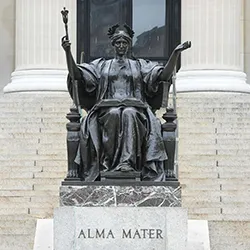
Image via Columbia News
Ah, the iconic Alma Mater. Sitting right in the heart of campus, it’s no wonder this symbol of academic pride claims a spot in every Columbia student’s and visitor’s camera roll. Alma Mater was designed by Daniel Chester French (who also designed the statue of Abraham Lincoln at the Lincoln Memorial) and donated by Robert Goelet (CC’ 1860) in honor of his wife and son. If you look closely, you’ll find a small owl hidden in her robe; rumor has it that the first student of each class to find the owl will become valedictorian. Alma Mater has also been through a lot in her lifetime: she was bombed in the spring of 1970 and had her scepter stolen by Cornell students in the fall of 1984, who dropped it off a few weeks later at the doorstep of Cornell’s Dean of Students (the statue of Ezra Cornell was later covered in light blue paint not long after the scepter’s return).
- Scholar’s Lion
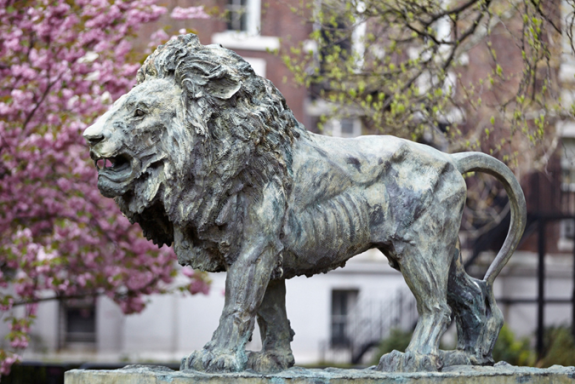
Image via Columbia College Alumni Association
You’ll always be sure to find a tour guide and their group of visitors huddled around Scholar’s Lion. The sculpture was designed by Greg Wyatt (CC’ 71), donated by the Class of 1971 and several alumni, and then unveiled in 2004 in honor of Columbia’s 250th anniversary. What I remember most from my NSOP tour of Columbia is our tour guide asking us, “Why do you think the lion has its ribs showing?” After receiving blank stares, they exclaimed, “To represent our hunger for knowledge!” Truly poetic.
- The Thinker
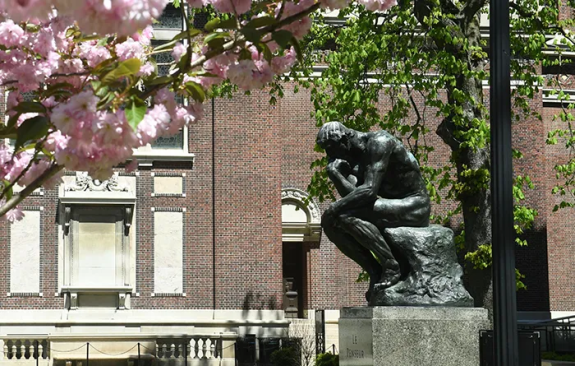
Image via Columbia News
The Thinker is one of 27 full-size castings of Auguste Rodin’s famous Le Penseur sculpture, and was installed in 1931 as part of Columbia President Nicholas Murray Butler’s mission to beautify the campus. As part of Rodin’s work The Gates of Hell, this pensive figure draws inspiration from Dante’s The Divine Comedy and embodies the expression of deep thought and rumination. Although, perhaps it might better represent how Columbia students look while contemplating the meaning of life when midterm season rolls around.
- Life Force
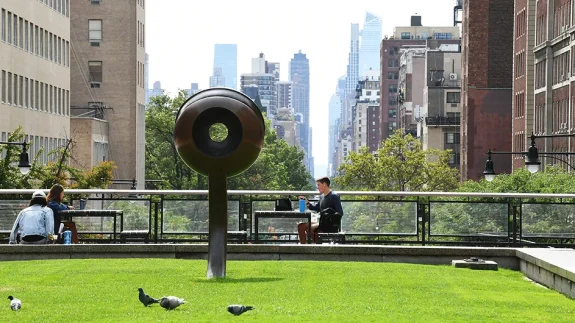
Image via Columbia News
Sitting in Revson Plaza, this bronze sculpture was gifted by an anonymous donor in 1992 and created by David Bakalar, a physicist-turned-sculptor who described the “life force” as including “the mating forces, the birth force, death force, competitive force, [and] nurturant force…” As a former Wien resident, I came to appreciate walking across the sky bridge at night and looking through the “eye” of the Life Force towards the beautiful city view beyond.
- Bellerophon Taming Pegasus
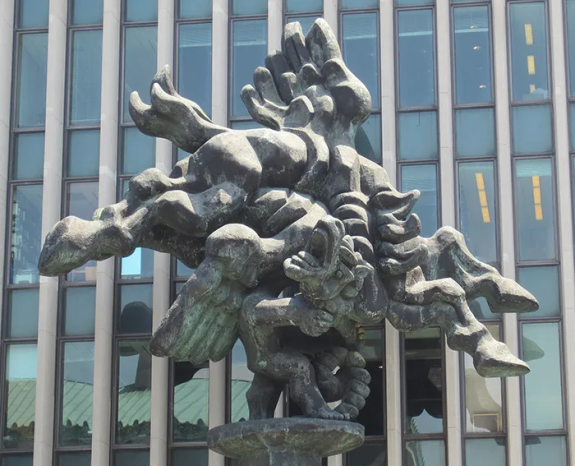
Image via Columbia News
Probably one of the most confusing statues on campus, this was designed in 1967 by sculptor Jacques Lipchitz and donated by alumni of the Law School in 1977; it’s also the second-largest metal statue in New York City, after the Statue of Liberty. It depicts the Greek myth of Bellerophon capturing Pegasus, symbolizing the triumph of man over nature and the establishment of law in the world (fitting for its location at Columbia Law School). Though, at the installation ceremony for the statue, a law professor was (anonymously) quoted in the New York Times saying, “That looks like me trying to teach criminal law.”
- Three-Way Piece, No. 1: Points
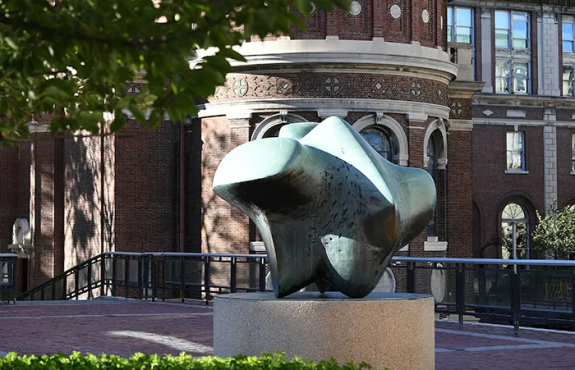
Image via Columbia News
I initially never thought much of this blob-looking sculpture, until one night I saw a group of students pushing it to turn it around; I’ve always wanted to try spinning it myself ever since (sadly haven’t yet). It was created by Henry Moore in 1967, who’s known for his abstract bronze figures. In describing this work, Moore said, “My idea was to make a new kind of sculpture, less dependent on gravity, which could be seen in at least three positions and be effective in all of them; a sculpture which you could understand more completely because you know it better.”
- Tightrope Walker
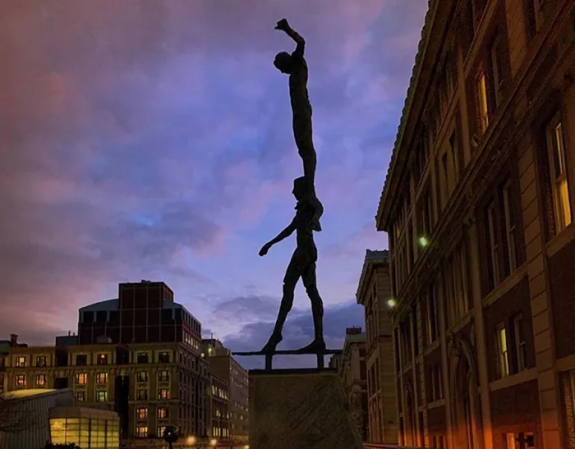
Image via Columbia News
These two precarious figures were designed by Kees Verkade from 1973 to 1979 as a tribute to the courage and “controlled daring” of General William J. “Wild Bill” Donovan. Donovan was a graduate of Columbia College and Columbia Law School and is prominently known as the father of the modern American intelligence service. Apparently, in 2007, some students placed a mattress below the statue, inscribed with the message “just in case.”
- Curl
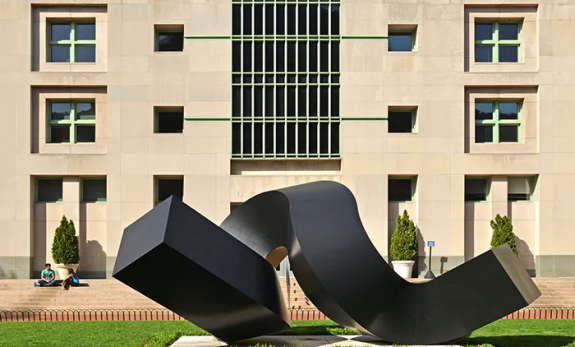
Image via Columbia News
Installed in 1968, this curious sculpture was designed by abstract and minimalist sculptor Clement Meadmore and commissioned by Percy Uris, the namesake of the building it sits in front of. Some say that it looks like a dollar sign, perhaps reflecting the business school that used to reside in Uris Hall before it moved to Manhattanville (though this is not confirmed). One might find someone lounging on the sculpture performatively reading a book (don’t do this please).
- The Great God Pan
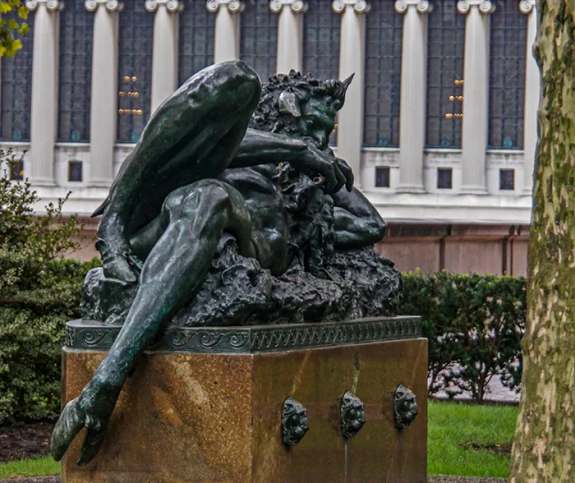
Image via Columbia News
A rather salacious-looking figure, this sculpture shows the half-man, half-goat Greek god Pan playing the pan pipes. Designed by George Grey Barnard, it was originally supposed to be made for a Dakota apartment building on 72nd St. and Central Park West in the 1890s, but was rejected for being too lustful. It was then proposed to be given to Central Park, but ended up being donated to Columbia by Edward Severin Clark. How scandalous indeed.
- Reclining Figure
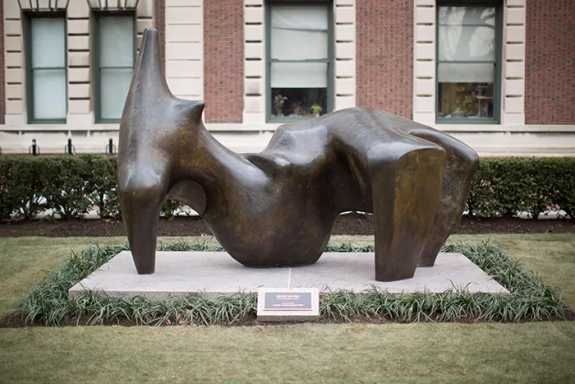
Image via Columbia News
I honestly didn’t know this statue existed until now, but it actually has a rather contentious history. In 2016, it was announced that this Henry Moore sculpture would be installed right in front of Butler Library; students immediately protested, stating that the student body wasn’t informed of this decision in advance and raising concerns about how the aesthetics of the statue would affect the surrounding landscape. In a CCSC petition regarding student opinion on the sculpture, 57.8% wanted to relocate it, 32.5% wanted its complete removal, and only 9.7% wanted to keep it in the original location. A Spectator article from the time called it the “dragon” to nest outside Butler. Now whenever I walk by Havemeyer, I’ll be sure to look out for this controversial figure.
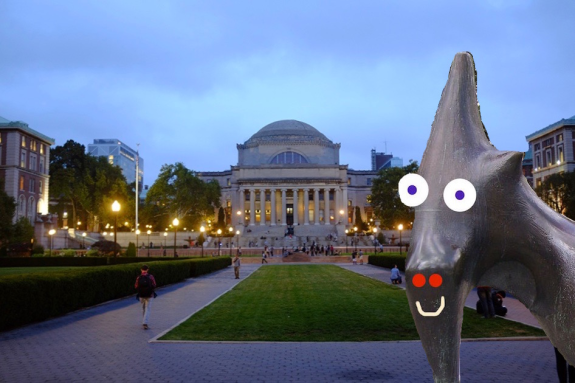
The dragon itself from Spectator
Header via Columbia University Libraries
 Loading ...