

 2 Comments
Learn all about the hidden secrets and history of one of Columbia’s most infamous buildings.
The Insider’s Tour of Mudd Hall
Mudd Hall is an infamous icon of Columbia’s campus. It is known for its large size, unattractive appearance inside and outside, but it also has one of the only street entrances remaining and has the only dining hall in the north part of campus. Today, I will take readers on a tour through both the known and unknown parts of the building to learn about the very large iceberg that is Mudd Hall, as well as some floor plans and how it got that way.
The Seeley W. Mudd Building, as it is fully named, was built in 1959 due to the Engineering Department running out of space in the Math Building. They started work on an “engineering complex” that would include both Mudd Hall and the Engineering Terrace that followed.
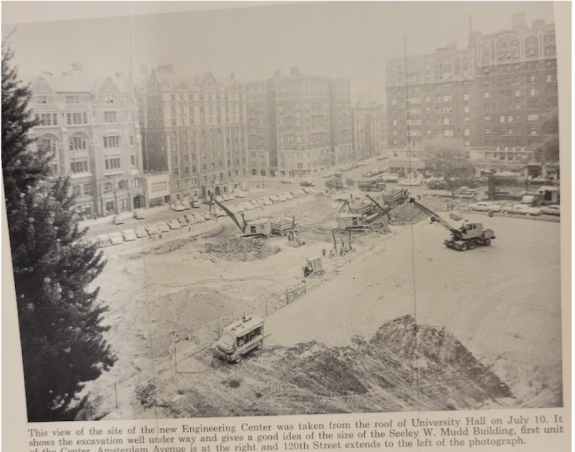
Photographs exist of the building’s construction. As can be seen, both ends of Mudd would have originally been on street level. However, this would change both when the Engineering Terrace was attached in 1966 and when the Service Building (aka the Grove) was built two years later, making the 4th floor from the original ground the campus-level entrance.
When you enter Mudd, the first thing you will notice in front of those shiny glass doors is the student lounge, known as the Carlton Commons. WikiCU informs us it used to be a cafeteria with a hot food lounge in 2011. It apparently turned into the lounge as we know it in 2016. If you move to the right you will visit Chef Don’s Pizza Pi, which is the only dining hall on the north end of campus. Chef Don’s is relatively new, having replaced a Blue Java Cafe in January 2023.

These locations are indeed just the tip of the iceberg for Mudd Hall.
Next to the Chef Don’s entrance you might see four elevators, labeled 75, 76, 77, and .. 80. Originally, Mudd had just three elevators, and the fourth one, which is noticeably larger than the rest, was added along with Fairchild Hall, the biology building next to it, in 1977. The architects who designed Mudd Hall (namely, Vorhees, Walker, Smith, Smith, & Haines) had already planned to add an area near the front for a potential new building, which Fairchild and the Terrace both accomplished.
Going up the stairs you will enter Mudd’s most common staircase, Stairway X. The stairwell is painted with the SEAS logo on backgrounds of various bright colors.
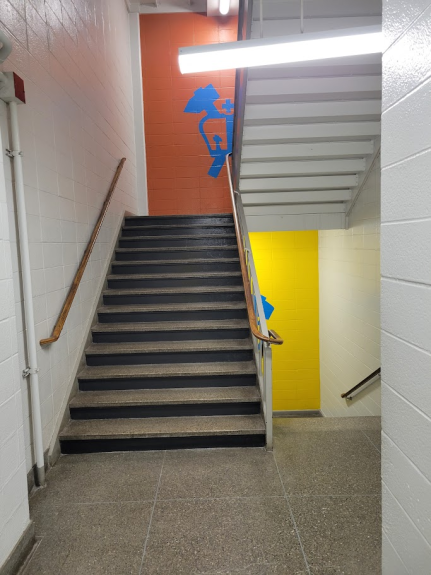
Most likely however you would want to take the elevator instead. With 15(?) floors and a basement it has some of the most numbered floors for buildings on campus (EC has 20; Butler has 15 including the stacks; NoCo has 14 with many mezzanine levels in between).
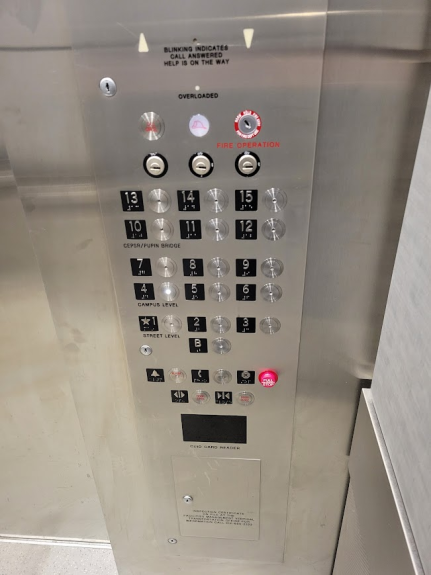
However, you usually cannot go to floors 14 and 15 here, as the buttons only briefly light up and then stop working.
Looking around most of the higher floors reveals similar floorplans: a simple east-west corridor with bathrooms on one end and a second staircase on the other. Offices are often on the north, but classrooms are often on the south. Usually the elevator bay contains chairs and such, as seen here, which can make them a good place to eat your Chef Don’s pizza if the lounge is closed.
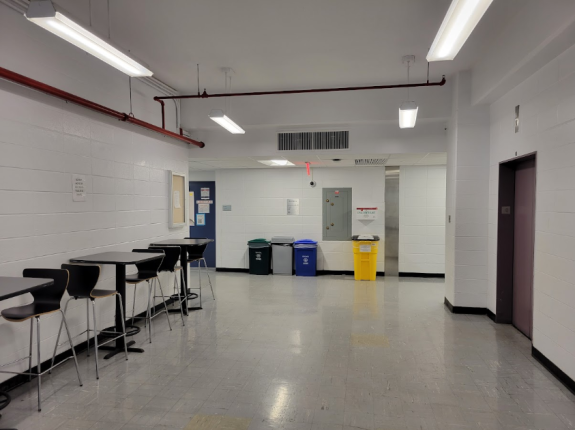
The other end usually has a ramp to Fairchild. However, the doors are usually locked, so it is usually not possible to go there from Mudd.
Some of these classrooms, like Room 1127, show great views of the campus below.
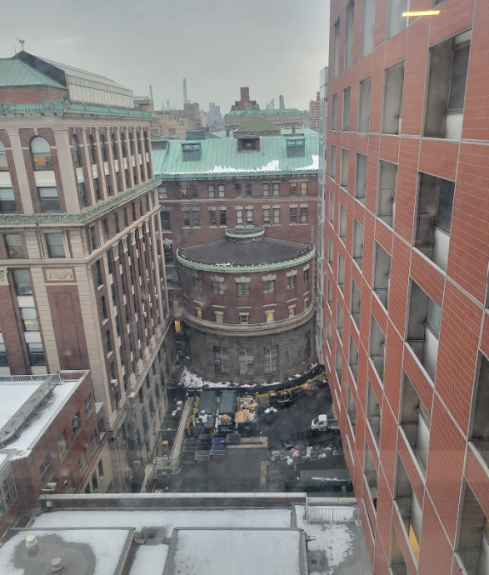
You can see the Schermerhorn Extension, the Schermerhorn Rotunda, and Fairchild from left to right. In front of the walls closest to the viewer is a “secret” courtyard.
On the “bathroom” end of the 10th floor corridor is, as indicated by the elevator, one of Mudd Hall’s landmarks, a skybridge to CSEPR. This was only added when CSEPR was built in between Mudd and Pupin in 1998; previously, that space had been home to a smaller lab building known as Pegram Laboratories.
This, and the terrace, are where most of the students will be able to access, but there are some nicer areas that students usually do not visit; the Computer Science Center and the Data Science Institute, and this is a good place to start before going deeper. However, because you need special card access for either of these places, you will need someone to let you in. The evening is a good opportunity because people will probably be leaving during those points.
The Data Science Institute replaced the old Engineering Library and was added in 2015-16. As can be seen from the picture below facing the Mudd entrance, it is a very large area with a lot of offices (including in the athletic department). There is also a kitchen and lounge chairs to be used for members of that department.
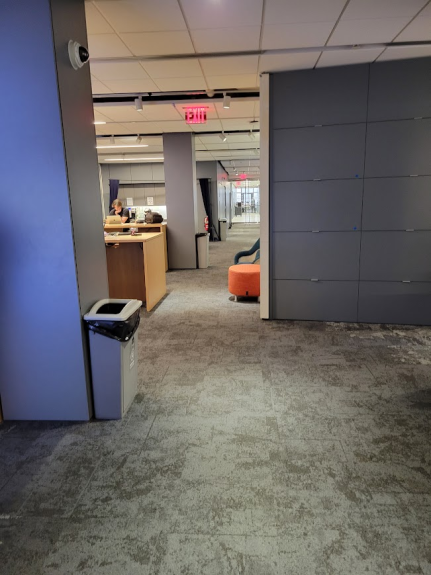
If one instead goes in the direction of Fairchild from the Mudd entrance, they will reach an area labelled Computer Science. It splits into two hallways, one going to the Fairchild entrance, and the other going in a perpendicular direction. It is a long carpeted corridor with a large window towards the outside.
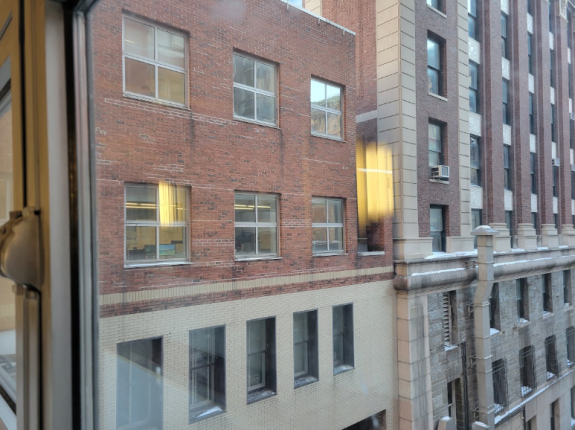
On the other side of the hallway you will see the hidden Mudd courtyard, which is surrounded by the building on all sides.
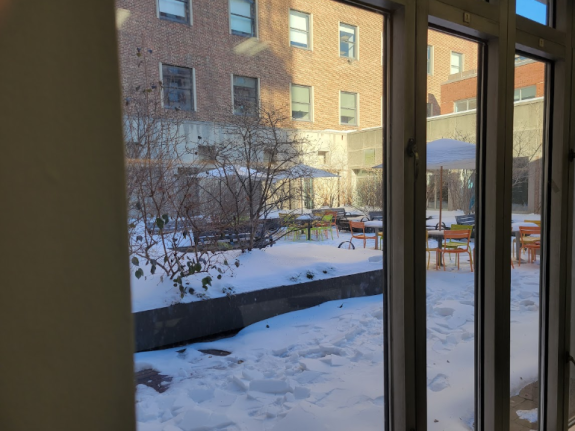
When the weather is warm it becomes a garden which smells quite nice.
On the other side of the courtyard is the Computer Science lounge which can be accessed by going further to the end of the hallway. The CS lounge contains a large kitchen, TV, chalkboards, and plenty of seating, as well as a view towards the courtyard.
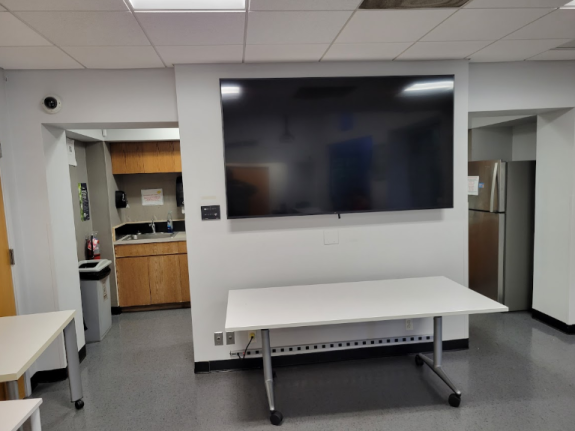
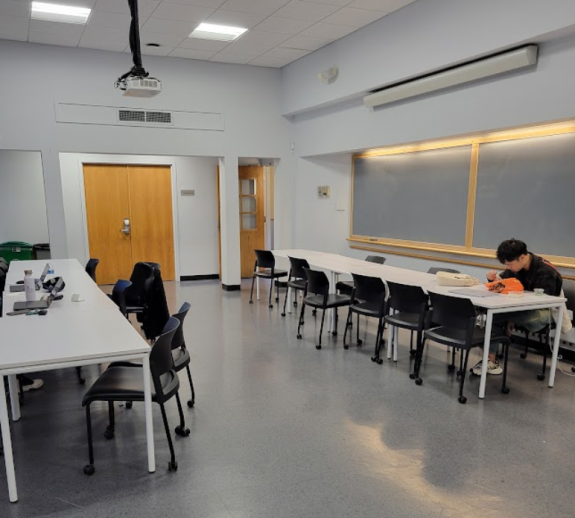
If you instead continue further to the end of the hallway you will see a red-carpet staircase leading to a larger atrium area.
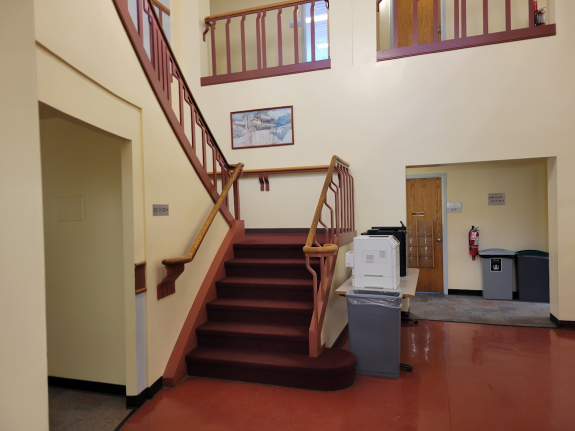
On top of the staircase is a book loaning area with a small lounge as well.
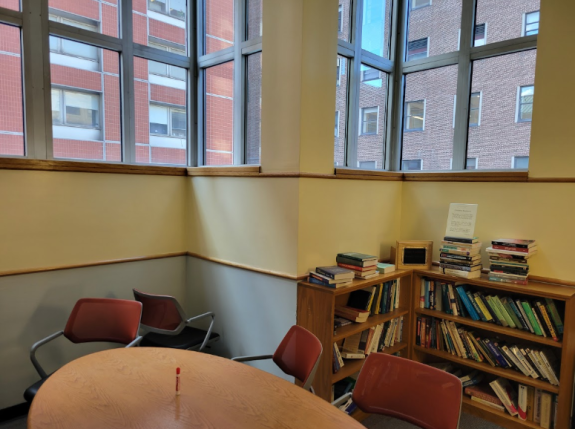
This is the Computer Science “building” which was built in 1983 atop the already standing Engineering Terrace. It contains some long hallways with cubicles, work spaces, and offices.
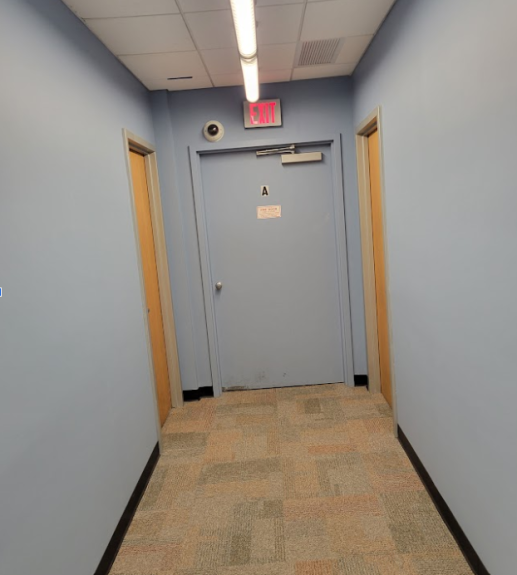
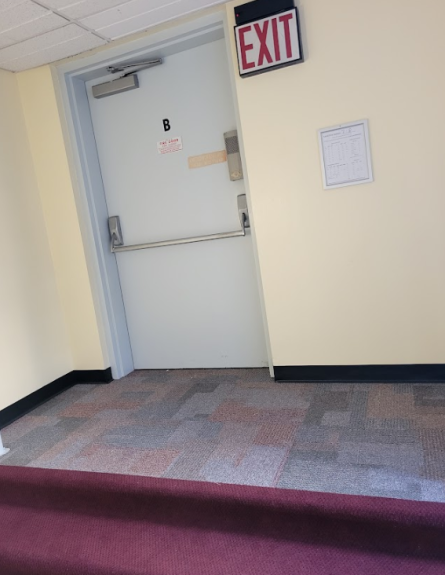
Some of the hallways have dead ends. Two end in doors labelled “A” and “B” which are most likely emergency exit staircases. I asked an individual there if they were emergency-only or general access, but he told me he did not know.
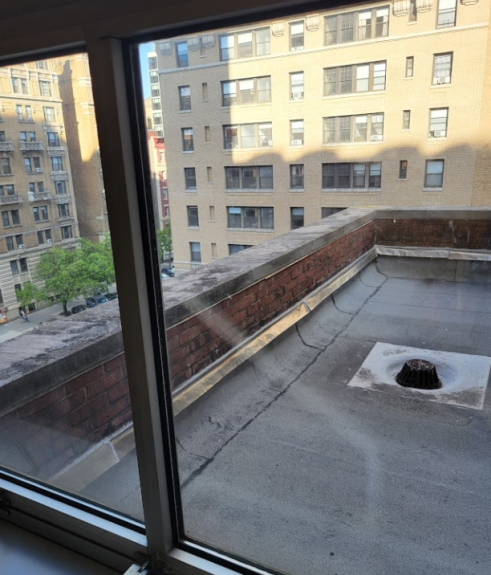
Near Door B is a nice view of the outside.
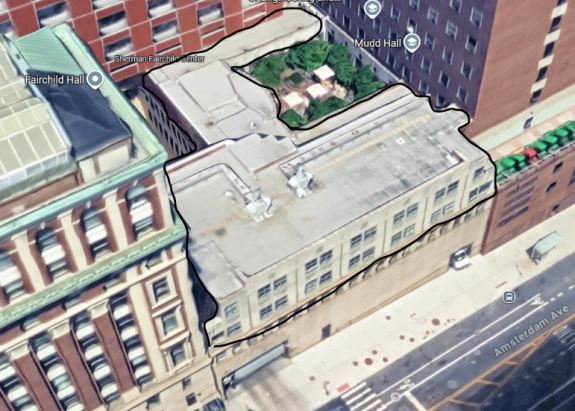
A quick look at Google Maps reveals the actual location of the Computer Science Building which was built on top of the Engineering Terrace. I encircled it in black here. With that, it is time to move on to the Terrace itself.
Going Deeper
If you take the elevator all the way down to floors B, 1, 2, or 3, instead of Fairchild (or the Computer Science Center) on the other side of the elevator bay you will see the Engineering Terrace. Built in 1966 it is a series of long paths awash with white cinderblock walls and a lack of windows.
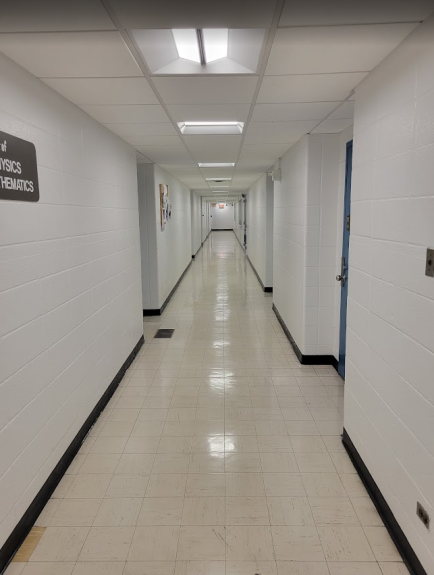
It is also notably the only building on campus that has little maps on the walls indicating the right way to go (right above an “emergency telephone”).
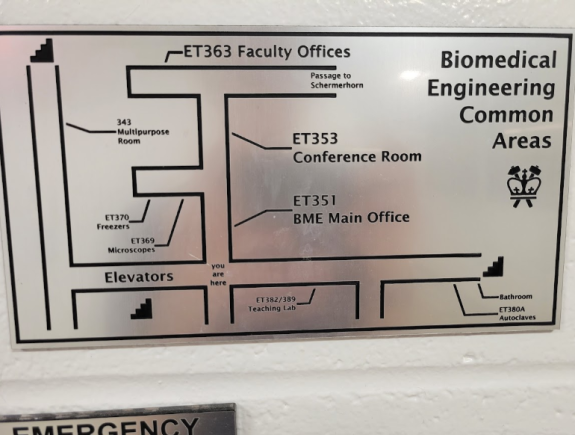
The Terrace has 4 floors, B through 3, and connects to Schermerhorn on Floors 3 and B, making it the final link in the Havemeyer-Schermerhorn STEM building chain.
Going down to the first floor will reveal a lounge-like area, with plenty of couches and chargers, as well as the 120th street entrance to Mudd Hall. Google Maps contributions by the legendary Joe Palacios reveal that the entrance was slightly less lounge-like 9 years ago, with more vending machines instead of couches, and they also show us one of the largest labs in the terrace. Looking at the immediate left and right from the entrance you will see some food vending machines as well as larger labs.
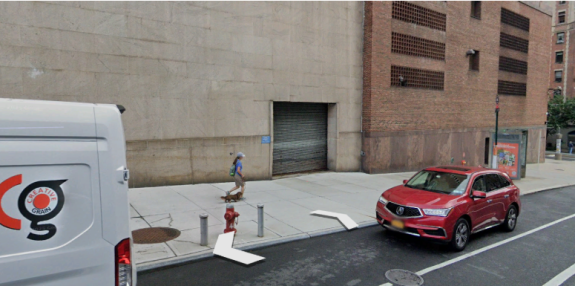
If you turn to the left you will go through a hallway that will lead to a door labelled “Not an Exit”. It leads to the loading dock with the garage door on Amsterdam Avenue in between 119th and 120th streets, according to the floor plan.
If you continue the main corridor from the 120th street entrance and through the terrace, eventually you will reach a set of double doors. They will in fact automatically open to reveal to you a gray and large cavernous room that is undoubtedly the school’s parking garage.
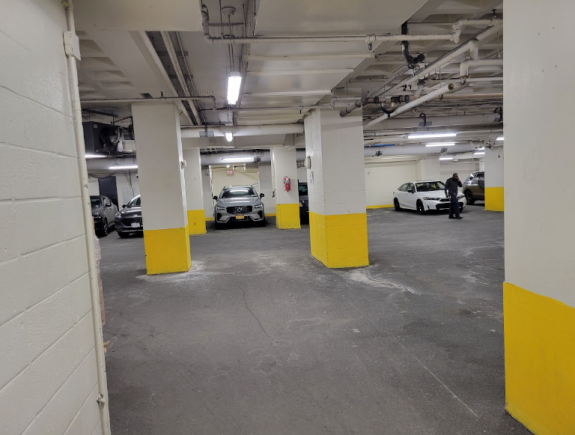
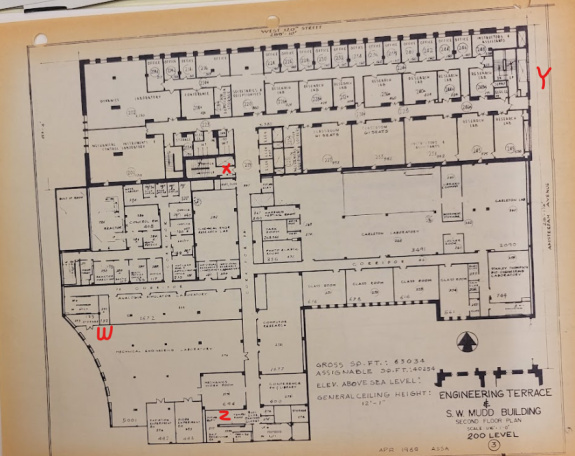
There are many doors and ways to turn from here but most are inaccessible. If you turn to the left from here, you would reach the garage door leading to the grove, and if you turn to the right before the doors, you will lead to an inaccessible corridor going to what was at least in 1969 a nuclear reactor. If you instead continue forward on the path you were on it leads to a circular plastic table, an ancient water fountain, and access to a third staircase, Staircase Z.
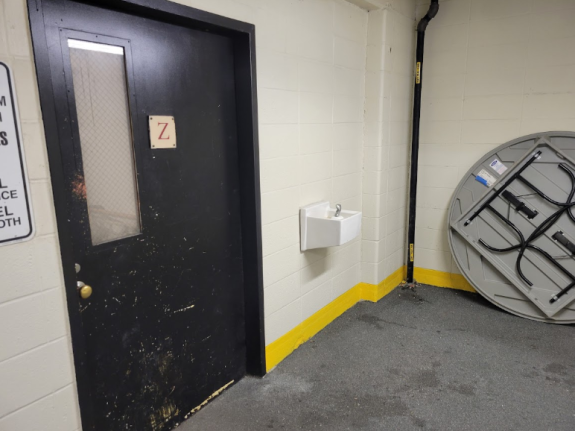
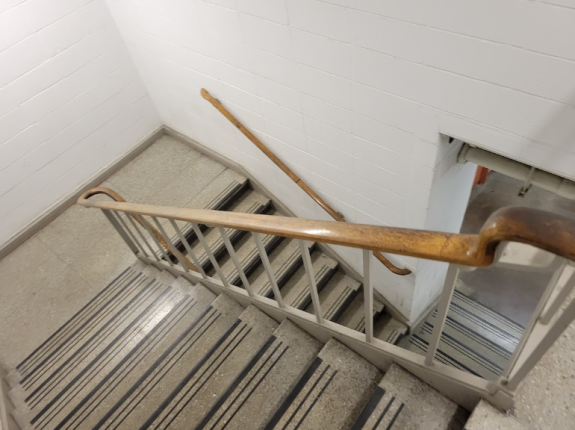
If you climb down Staircase Z you will get to the garage lower level, which also leads to the Mudd basement. Climbing up Staircase Z will lead you to the Fairchild entrance and staircase itself.
Eagle eyed viewers may have noticed that the map I showed had in fact included three staircases, and Z is in fact the one at the end of the main corridor path. However, there is in fact at least one more, which is inaccessible.
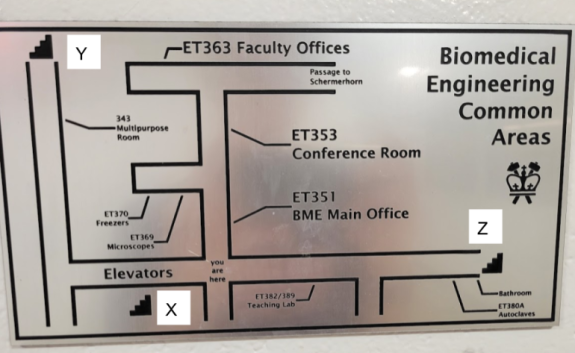
If we look at the actual floorplans acquired from the Columbia Building Archives at Butler Library, turning to the right from the “You Are Here” corridor will lead to a dead end, at the end of which is a fourth staircase, labelled Staircase W.
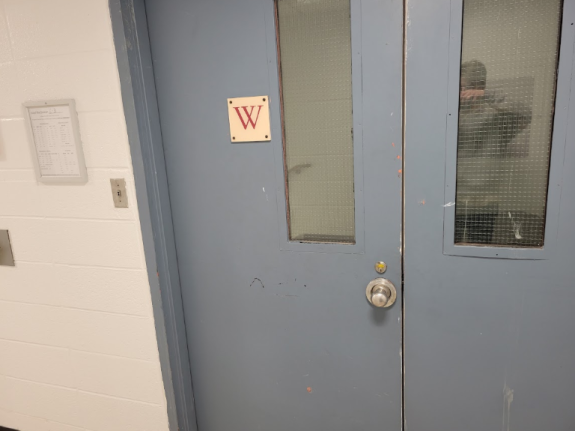
Staircase W, unlike the others, is completely inaccessible, and nothing can be seen from it except from the second floor, in which there is a tiny glimmer of light from presumably a door on the opposite side.
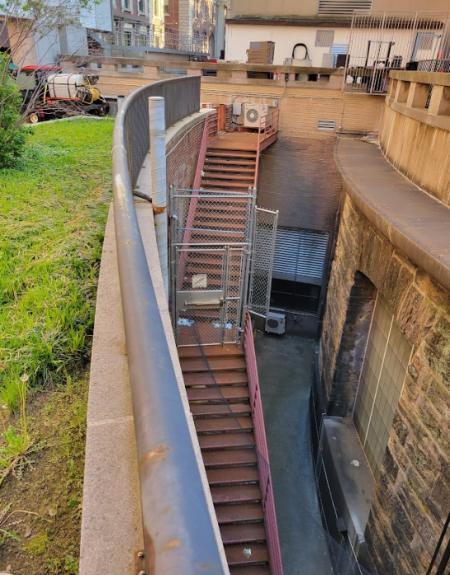
Floor plans indicate that going through the exit on this floor leads to the small staircase behind Uris seen from outside.
A Trip Up Staircase Y
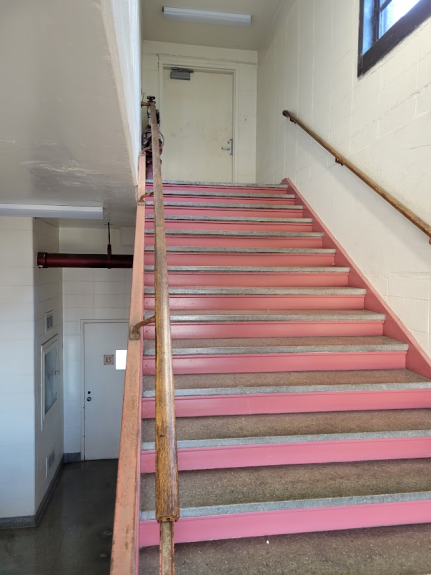
Floor 2 is the lowest floor from which I could access Staircase Y (the 1st floor exit of it being an emergency exit to the street), which as mentioned is on the east-facing end of Mudd itself. It is quite mustier than the other staircases in the building.
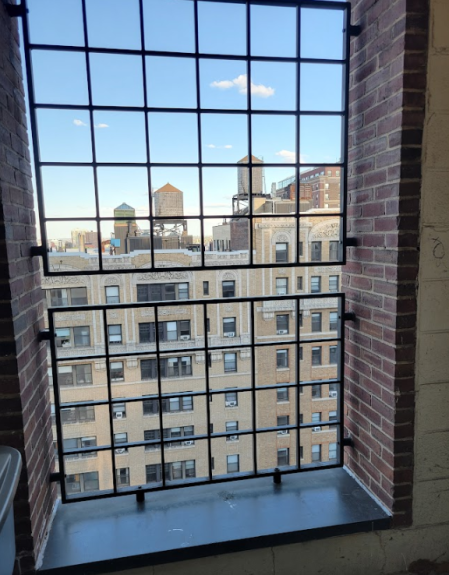
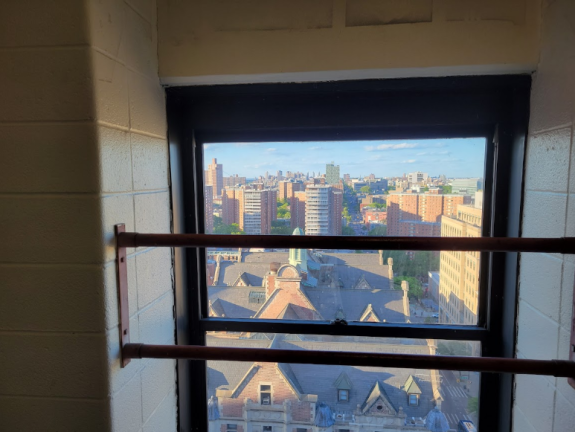
On most floors, the entrance to the staircase is a small vestibule with a door to the left and a window that, instead of being completely covered, is just a grid of metal bars. I could feel the warm May air blowing in.
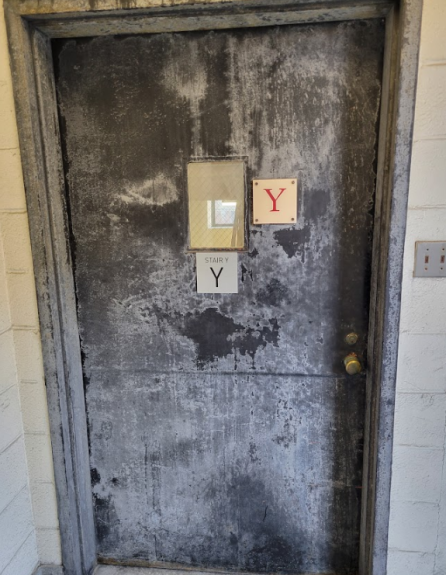
At the bottom of the staircase you will find that the doors are quite dirty, and the vestibules have a lot of exposed wires on their ceilings.
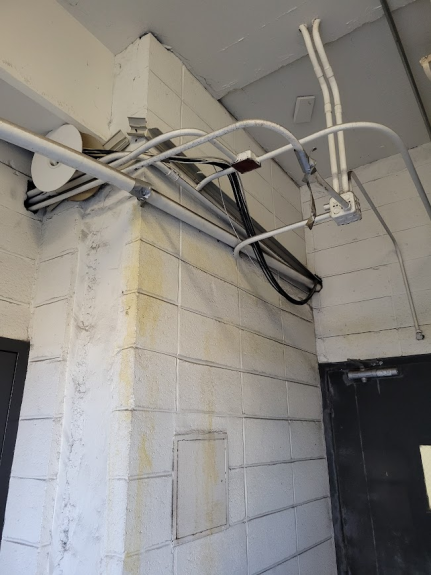
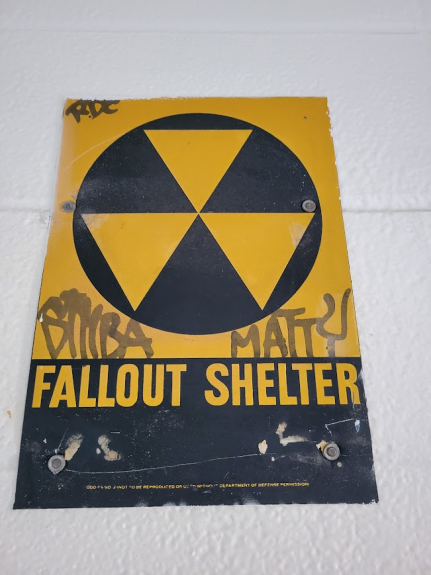
Graffitied fallout shelter signs are also on most of the landings.
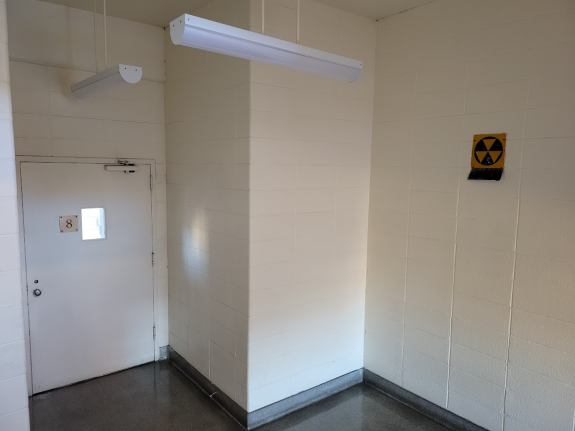
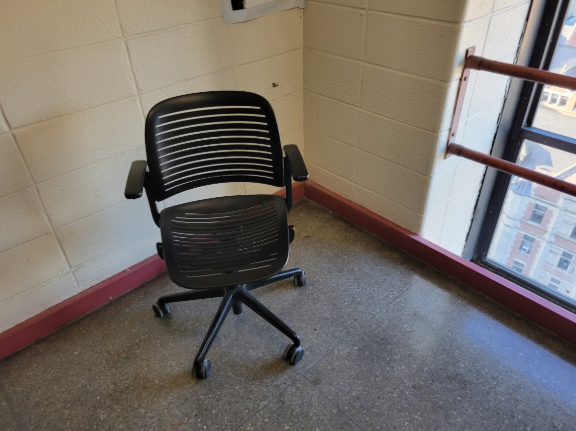
As you approach the top things get stranger. You will see dumpsters of packing peanuts and rolling chairs, but also great views of north of 120th Street.
Finally, when you reach Floor 14, you will see an unmarked white door. There is no way to go up any further.
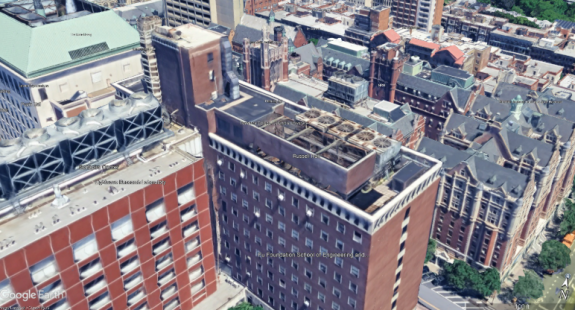
This discrepancy in the number of floors in the building could be explained with the floor plans. After all, Columbia says Mudd has 19 floors. According to the floor plans, 13 is the highest floor that contains classrooms. “Floor” 14 (the highest accessible by stairway Y) is the “main roof”, and floor 15 (the highest accessible by the elevators) is the fan loft. Floor 16, accessible by stairway X, is the Fan Loft Roof. Floor 17, at the top of Stairway X, is the elevator machinery room, and a small ladder goes from there to “Floor 18”, which is the Water Tank. As can be seen by the Google Earth image of Mudd, the “floors” above 13 take up a lot less area than the rest. You can also see the Stairway Y entrance to Floor 14.
The Basement and Outside
At the bottom of Mudd is probably the darkest area of all, the basement. Only one elevator (75) will take you there, and there are doors to the elevator shaft of the others next to a vending machine.
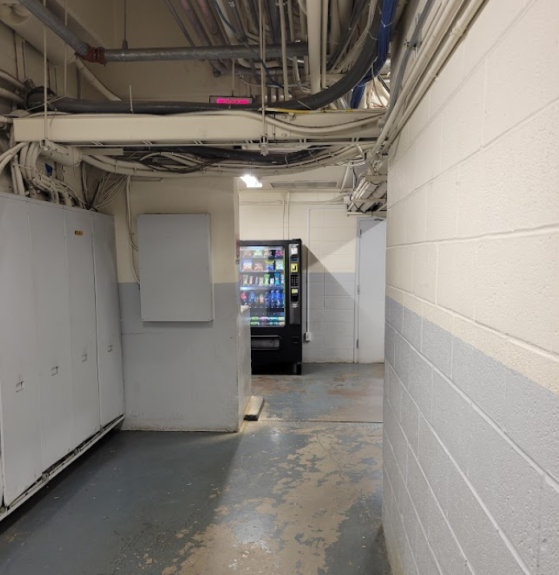
There are still a few labs in the basement warning about their dangerous materials, as well as a car racing club. The bottom floor of the parking garage is here, and if you go through that door you would be able to go back up to the Grove entrance.
The final stop on the tour is back outside the building on the campus level. If you continue walking through the space in between Mudd and CSEPR, you will get to the part in front of Mudd that has an open view of 120th Street.
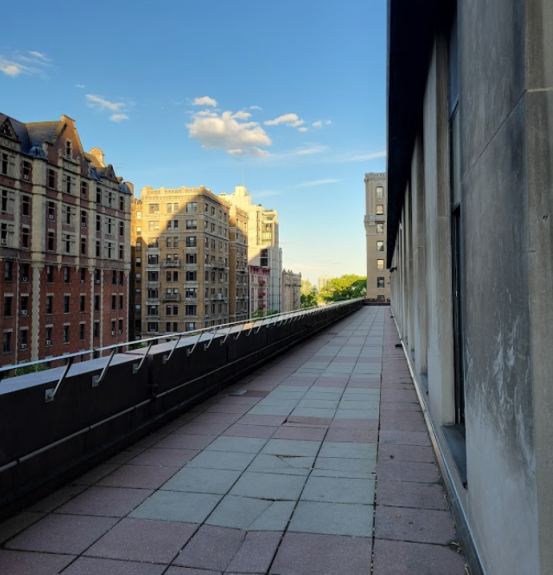
Looking inside through the windows gives you a view of the Data Research Institute, but you have to be careful while walking because some of the tiles are not fully stable. Getting to the end will uncover another secret:
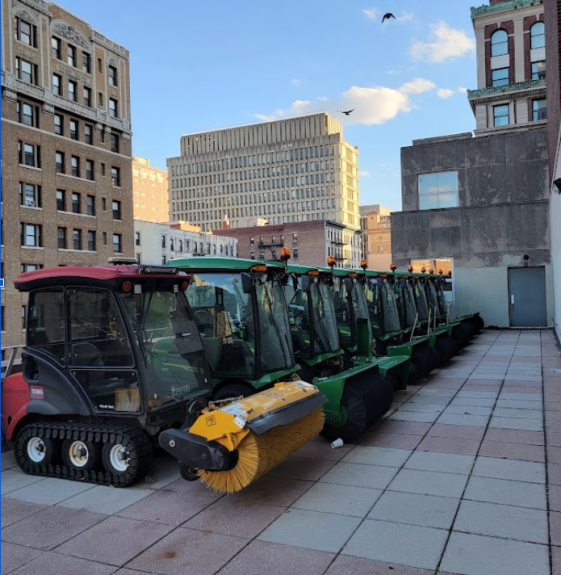
As it turns out this is where many of our campus’s winter rock salt machines are located, and how they can be moved onto campus relatively easily. If you look at the door, I am fairly certain it leads to the Computer Science area.
Conclusion
I hope you enjoyed this tour of the ins and outs of Mudd Hall, one of Columbia’s most famous and infamous buildings.
All images by Olin Bose unless credited otherwise. Bird’s eye view and street view maps created via Google Earth.
 Loading ...
2 Comments
@Anonymous Great article. New Bioengineering building opening this summer at the Medical Center as well as new Engineering building starting in Manhattanville.
@Anonymous Mudd’s solid cinder block was blessed to be designed by actual engineering professors. It has none of the leaks and hazardous materials vanity introduced to the Uris, Law and International Affairs buildings. When Fairchild was opened, the tiled outer walls were falling off just like the original Space Shuttle.